


This week, a member of a prominent Hampton County banker was convicted of six federal bank charges in an internationally known criminal case involving disqualified attorney Richard “Alex” Murdow. But locals here know that the Hamptons have a history of famous and unconventional bankers.
Russell Lucius Laffitte was found guilty of bank fraud, conspiracy and other charges in federal district court in Charleston on November 22nd. Lafitte, who was fired as CEO of Palmetto State Bank in the Hamptons in January, is the heiress to a Lafitte banker who has financial interests in banks throughout the South Carolina Lowcountry.
Lafitte is accused of conspiring with and aiding Murdeau — a former Hampton attorney who himself has been accused of financial crimes and charged with murder in the deaths of his wife and son. It has become a hot topic all over the world.
But Lafitte isn’t the first Hampton bunker to make national news.
RO Bowden, the man who played with his own banking rules
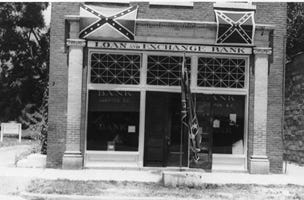
Palmetto State Bank began in 1907 as a loan and exchange bank, according to a 2007 South Carolina House resolution marking its centenary. 1970 Palmetto State Bank.
The House resolution states that the Loan and Exchange Bank is “a small branch exchange bank established on Lee Avenue in the Hamptons, a South Carolina state that survived the Great Depression with its conservative lending practices. It has become one of the few banks.”
Perhaps it had something to do with the unconventional banking practices of its original founder and president, RO Boden.
Not a “Special Respondent”:Murder Case: SC Says Alex Murdoh Shouldn’t Be ‘Special Respondent’
Power, Fame, Privilege:Inside the Rise and Fall of the Murdo Dynasty in South Carolina
Although he was never accused of any state or federal crime and was not associated with the Lafitte family, Ralph, commonly known to locals as “Bunker Borden” or “Old Man Borden” Oren Borden does business by his own rules and like other bankers don’t.
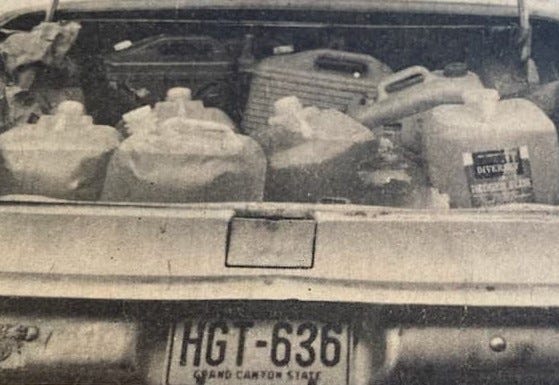
Bowden was known for offering unusual loans to customers and even requiring unusual collateral. A proponent of the “wet” pro-alcohol movement during and after Prohibition, Borden noted that others, such as copper tubes, barrels, and other items often associated with the construction of moonshine distillers I lent money for items I deemed suspicious.
According to a famous local joke, he knew it when he saw a smart and thriving business plan.
He owned a side business, Horses and Asses Farm, where he loaned farmers money for livestock and even mules. After his one such case, when questioned by an outside bank inspector, he had a mule brought in and was a safe investment, with good teeth and a shiny, healthy coat. I showed that.
According to his family, Borden even once lent people money as “collateral.” In a “Salkehatchie Stew” interview conducted by the author for the University of South Carolina’s Salkehatchie History Project, his offspring recalled an interaction with a new young doctor fresh out of medical school. Hand asking for loan.
When Borden asked the doctor what he had as collateral, he said he only had a wife and children for now. So the banker dug out their names and ages and put them on the loan documents as collateral.
But traditional bankers were hesitant to finance modern goods like automobiles. He reportedly called the Model A Ford “a contraption” and said he wanted to lend the mule money.
Borden sparked national controversy with the Confederate flag
Known as a quirky old-school Southerner, Bowden made national headlines in the early 1950s.
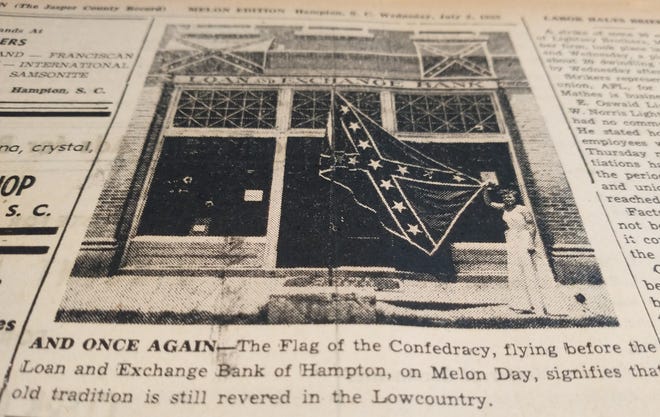
The old banker continued to hang the Confederate flag over the front of the bank, while others flew forward. When the Associated Press widely circulated a photograph of the bank and its flag, Borden received condemning letters and postcards from across the country. He praised his “spirit.”
Borden continued to fly the Confederate flag until he sold the bank to the Lafitte family in 1955.
A banker and a bank robber became unlikely friends
His antics made him widely known throughout the county, but an unlikely friendship with a notorious bank robber sent Boden to New York City to appear on NBC’s radio and television shows. .
In October 1950, Bowden received national recognition when he hosted one of the nation’s most notorious bank robbers, James “Big Jim” Morton of Cleveland, Ohio, at Pink Ridge Hill, a fish camp on the Savannah River. She made headlines and appeared on radio and television.
This bizarre banker-bank-robber friendship is such that Boden reads “I Was King of Thieves” in Morton’s “Saturday Evening Post” series, and it’s funny to meet such a criminal “artist.” It developed after I decided that it would. Borden then wrote Morton a long letter, and after a brief correspondence, invited Big Jim to visit him.
“Ralph was the first banker to invite me to his house, and probably the last,” Morton told reporters. I just realized it’s not my home.”
Boden responded, “I think I must be the only banker in the world who entertains a yegman. To me, Jim looks like a Christian gentleman, a politician. He’s got all the hallmarks, he’s polite, he’s handsome, and I think of him as a torch artist as well as a literary man.”
While enjoying a fine dinner at Fish Camp, the curious banker asked the reformed robber many questions.
“What’s the biggest haul you’ve ever made?” he asked.
“$184,000 from a bank safe deposit box in Indiana,” the robber replied.
“Do you think robbers will attempt a night vault like the one I set up at my bank a while ago?”
“Experienced burglars knew there wasn’t enough in a town like Hampton to be worth the effort, so they didn’t break it.”
TV specials:CNN and HBO Max air TV special to investigate murder and alleged crimes against Murdoh
What we know and don’t know:What we know and don’t know about Alex Murdau’s crime story
When asked by a reporter if he ever robbed one of Borden’s banks, Big Jim replied, “No, I haven’t robbed the Loan and Exchange Bank. I mean, not yet.” I was.
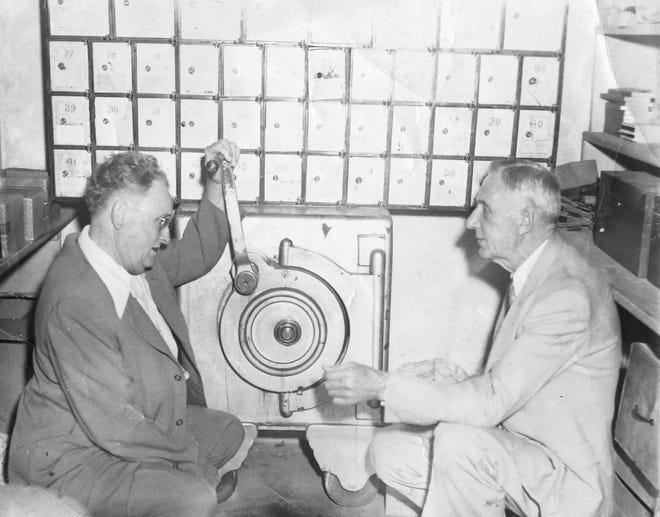
In a photo of the two men in front of Borden’s bank vault, it’s hard to tell at a glance which of them is a professional banker and ex-criminal. Morton was clean-cut and well-dressed, while Borden appeared plainly dressed with disheveled hair.
Boden and Morton later traveled to New York to score hits on the Thursday night radio show “We the People” and Friday night TV show.
It was reported that “the radio in this section was tuned to NBC for Thursday night’s broadcast, and many people watched the show.” Hampton County Guardian at the time. “Most people who listened to and commented on the show said they were really thrilled to hear, ‘We’re taking you to Hamptons, South Carolina…'”
