


Mary Helen Moore, News & Observer
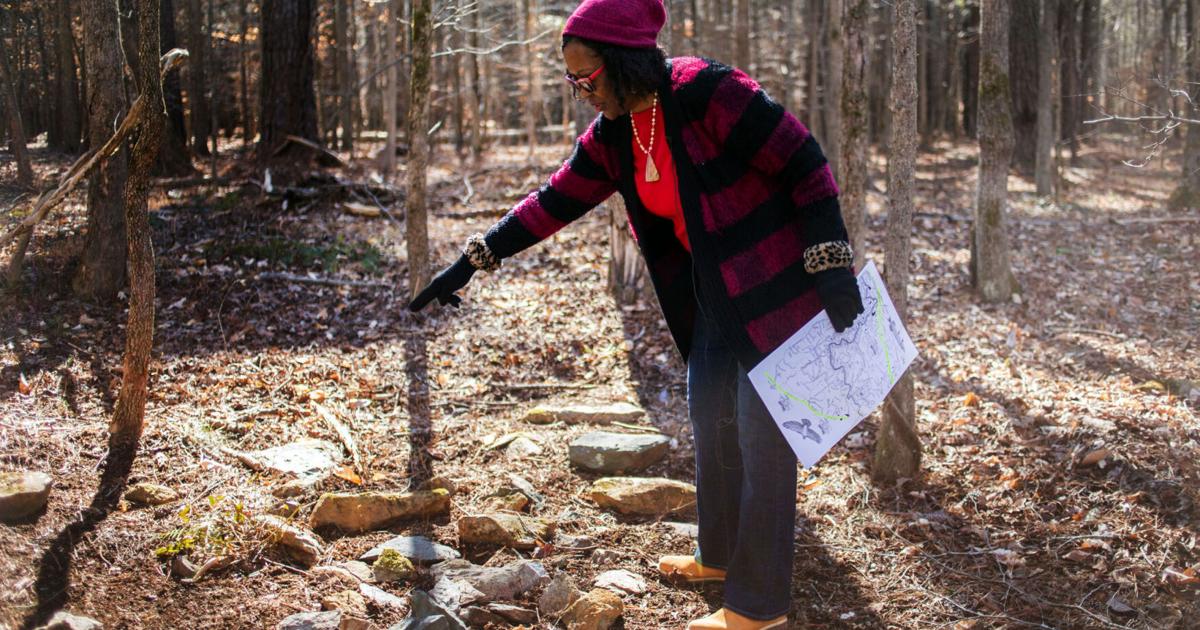
Carrboro, North Carolina (AP) — Graves are marked with natural stone only.
It is a burial ground invisible to the untrained eye, hidden in the hardwood forest along the border of Orange and Durham, where dozens of rough, moss-covered boulders guard a faint hollow in the ground. I’m here.
This cemetery is believed to contain the remains of those who were enslaved at Hardscrabble Plantation in the 1800s.
But in a packed conference room on the third floor of the Orange County Deed Registry, the deeds of this land were recently handed down to a nonprofit run by the descendants of the burials, so a house was built around it. However, the certificate is saved.
Beverly Scarlett, who runs the nonprofit with her sister, called it a “deep” gift.
People are also reading…
“Our ancestors paid a price to live the quality of life we live today. And there are some things we can do to keep their memories alive.” Recognize and respect sacred places… Recognize and respect our elders,” Scarlett said. please contact me.”
The existence of the cemetery was unknown to the Parsley family, who owned the land, but a neighbor, whose family had lived there for generations, saw a real estate agent on the land and discovered it early in the spring. I made him aware of its existence on stage.
“If you don’t look for it, you won’t find it,” James Parsley said in an interview. “Nature has taken over the entire property.”
The Parsleys had a surveyor come to the property and confirmed that the property was a cemetery with up to 75 graves. Three more infant graves were later identified under fallen trees.
Hardscrabble Plantation was owned by a prominent NC family
Hardscrabble Plantation was located on what is now St. Mary’s Road in County Durham, less than a mile from the Orange County line. Home is still standing.
“St.
The Kane family had strong ties to state politics at the time, and historical records show that in 1830 they operated a 4,400-acre plantation that enslaved 95 people.
According to the Open Durham Historical Archives, William Kane became the largest landowner in Orange County in 1800.
Workers produced oats, wheat, and corn, in addition to tobacco and cotton.
The Cain family sold their last land in the 1970s. Most of them were subdivisions, with dozens of homes bearing the familiar Hardscrabble name.
“History Tells Its Own Story”
Former District Court Judge Scarlett said she and other descendants of those enslaved at Hardscrabble Plantation came from a mixed legacy.
“We’re what I think of as ‘Maroon people’ in that we’re a mix of African Americans, Native Americans, and whites,” she told The News & Observer.
Their non-profit organization is called Indigenous Memories Inc.
“Our people were in and out of slavery, even those who were not brought there by deed. said Scarlett.
There are two other burial grounds just to the west, all differently marked, which Scarlett says has revealed information about who’s buried underground.
“It’s like history tells its own story,” Scarlett said. There is a cemetery where was enslaved.”
Act Reveals North Carolina’s Black, Indigenous History
Hillsboro resident Parsley and his wife, Carolyn, were at a ceremony to donate an acre to Native American memory.
The Parsley brothers have owned over 100 acres along St. Mary’s Road since the early 1970s. They have cut down some timber over the years, but the land remained largely untouched until a few years ago, when they divided up some parcels and began considering developer offers.
“We decided it was more important to protect the cemetery and give it a future,” Parsley said of the cemetery. I am very happy.”
Orange County Deeds and Registry Mark Chilton works to catalog handwritten deeds, wills, and slave trades from the 1700s and 1800s, revealing information about Blacks and Native Americans in Orange County.
“I have to say that doing this research can be very depressing at times,” Chilton said. “It is very sad to see how people were treated in those days and how difficult their fate was.
“But their families live on. …Many of you in the room I was introduced to a few minutes ago are descendants who are with us because of the will of these people.
For copyright information, please contact The News & Observer, the distributor of this item.