


The death penalty continues to come under near-constant scrutiny in the United States. Last week, the state of Tennessee issued a report saying it had killed inmates with drugs that had not been properly tested, for failing to follow new rules on lethal injections enacted in 2018.
Missouri executed 49-year-old Amber McLaughlin on Tuesday. She is believed to be the first transgender woman to be executed in the United States after a state governor rejected her petition for pardon, accusing her childhood trauma of causing mental health problems .
Four South Carolina inmates have completed their routine appeals and may be issued death warrants once the courts have resolved their matters. The state Supreme Court will probably not rule for months, and those who don’t like the ruling are likely to file federal appeals.
South Carolina hasn’t executed a prisoner in nearly 12 years. Supplies of the drug for lethal injections have expired, and pharmaceutical companies refuse to sell more, knowing it will be used to kill someone.
From 1996 to 2009, South Carolina averaged about three executions per year. The last time he did it was in 2011.
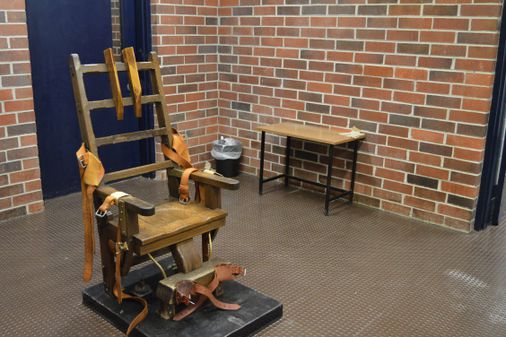
In 2021, the South Carolina legislature passed a law replacing lethal injection with the electric chair, the legal method of killing prisoners in the state for more than a century.
Those on death row who did not wish to be electrocuted could choose between newly formed firing squads or, if possible, lethal injections.
Justice 360, an organization that fights for fairness and transparency in the death penalty and other major criminal cases, has filed a lawsuit. The group argues that both firing squad and electrocution are more painful and brutal ways to die than lethal injection. It is no longer a true choice in the states.
Circuit Court Judge Jocelyn Newman, who held a trial in August and stood by four death row inmates, said their expert said the body was “cooked” by electricity, assuming the shooter was on target. Prisoners testified that whether they had been shot or their hearts had been stopped by bullets, they would feel terrible pain.
State attorneys countered their own experts who said death by firing squad or electric chair would be instant and that the convict would feel no pain.
“Suspects (as well as the circuit court did not answer) asked questions such as ‘how much pain was too painful’ and ‘how many seconds the convicted inmate was conscious before the method of execution.’ It has yet to provide any answers to questions such as “can it be kept?”, state attorneys wrote in their complaint to the Supreme Court, “would be unconstitutional.”
The inmates’ lawyers said it was impossible to answer these questions directly because those who experienced the execution were dead.
“This is exactly the kind of situation that requires expert testimony. Electrical and medical experts cannot say with absolute certainty what a person who dies in the electric chair experiences, but how the human body We can say with reasonable scientific certainty that it works: it interacts with electricity,” the lawyer wrote simply.
In the United States in 2022, public support and the use of the death penalty have continued to decline for more than two decades, according to the annual report on the death penalty released in December.
There will be 18 executions in the United States in 2022, the lowest pre-pandemic year since 1991. Excluding the year of the pandemic, his 20 death sentences in 2022 were the fewest in the United States in half a century. The Washington, D.C.-based Death Penalty Information Center reports:
