


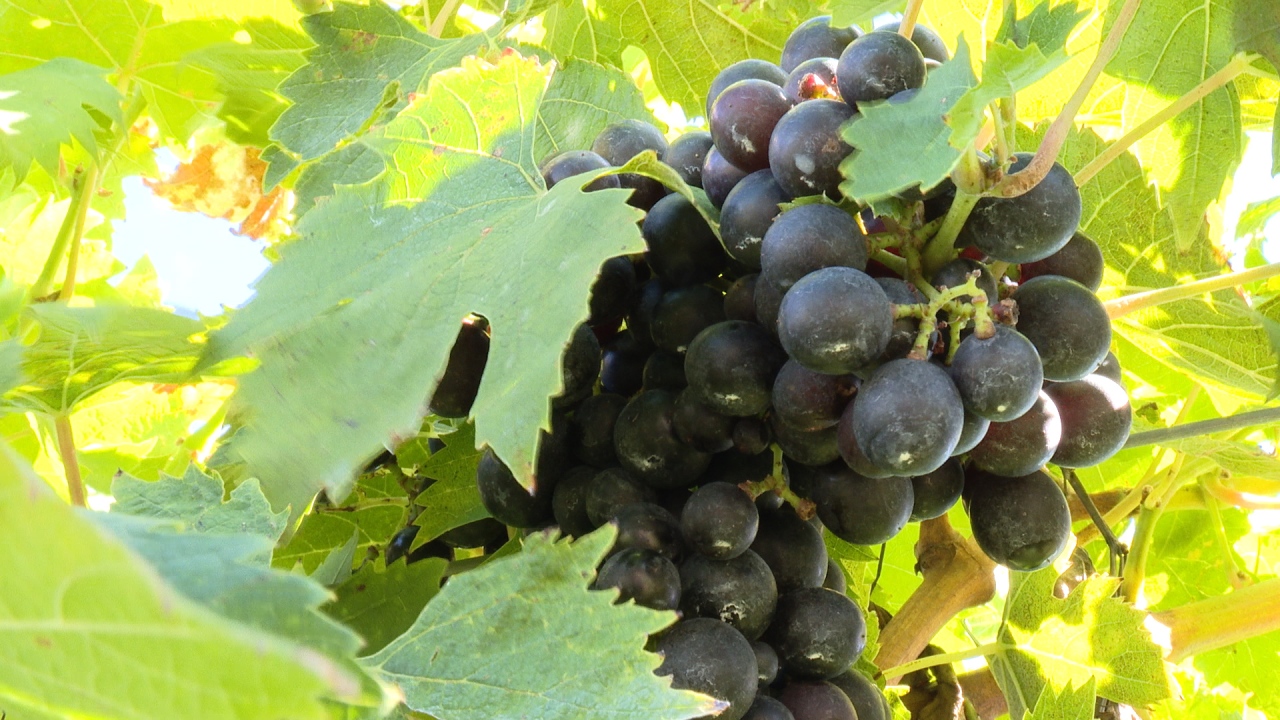
North Carolina (QUEEN CITY NEWS/PINPOINT WEATHER) – “But it’s beautiful here,” says winemaker Chris Nelson as he looks out over the Lafaldini Vineyards every day.
The vines focus exclusively on Italian varieties. Since 2001, we’ve been blazing trails in the mountains of North Carolina.
“This is the most grapes we’ve ever gotten from a property,” explained Nelson. “We got about 89 tons from 28 acres.”
This year was a fruitful growing season, but “it was the shortest harvest in four years,” he added. It was slow and soggy.
Summer rains made the vines waterlogged and slowed their growth.
“We’re getting more precipitation. That’s the biggest trend we’ve seen,” Nelson said.
I’ve been more immersed in it lately.

Temperature plays an important role in the success of the vintage during the growing season. A few degrees of difference can make a wine good or bad.
Heat, flooding, and smoke are all weather conditions that damage vineyards, but heavy rain poses the most significant risk to North Carolina wines.


Since 1970, Piedmont has been getting more intense rainfall per hour, adding at least two additional days of torrential rainfall of an inch.
For several years, Nelson rained twice the average annual rainfall at Lafaldini Vineyards.
“We have so much moisture in the air. We have thunderstorms a lot, so in an hour we’re going to get four inches of rain,” Nelson explains. “What do you do to alleviate it? We’ve had so much rain that we can’t go back to the vineyard for a few days.”
High humidity puts grapes with thinner skins and more compact clusters at higher risk of fungus and rot, adds Nelson.
“At 85{ea2cba5bdf6fe62bbe85e24807814144a71e77d3ae7311fbc27a008558d1372c} humidity, all kinds of spores, molds, fungi, and microbes there like it,” Nelson said.
So, Nelson and his team say, “Three of the last four years we’ve had record rainfall,” explaining the need to get creative and adapt. He adds: Which breeds will thrive in this new, warmer, more extreme environment?”
Normally every row of the vineyard is filled with lots of trees, but Lafaldini is migrating some trees to new varieties. The San Marcos variety was the first to be tested in the state because it can withstand the heavy rains and humidity of Carolina and can often cause disease.
Its thick skin helps fight off excess moisture, but it’s not without patience.
“We want to be the first to plant this vine in North Carolina and hope it brings us beautiful wines,” he said.
Beautiful wines are also born from this process. Nelson explained the procedure.
“Our drying room, the Fruttaio Grande, can hold seven tons of grapes at a time. We have dehumidifiers and six fans,” Nelson explains.
North Carolina grapes are often soggy from heavy rain and humidity, so Nelson uses a traditional Italian process called “appassimento” to dry them.
“The relative humidity is around 85{ea2cba5bdf6fe62bbe85e24807814144a71e77d3ae7311fbc27a008558d1372c} on day one and 45{ea2cba5bdf6fe62bbe85e24807814144a71e77d3ae7311fbc27a008558d1372c} on day four, so in the process we remove 20-30{ea2cba5bdf6fe62bbe85e24807814144a71e77d3ae7311fbc27a008558d1372c} of the weight of the grapes, which is water,” he explained. “So it allows us to focus our flavors and create bolder wines.”
The dried grapes move to the fermentation room where the magic happens. There, rows of tanks break down sugar and yeast to make alcohol.
After sitting on the pericarp for flavoring, the grapes are moved and pressed, and the wine begins to flow in one roll of the machine.
His favorite part is the first taste of the harvest. At first, it looks a little cloudy due to the fresh yeast and grape ingredients. He explained: become clear. ”
The taste is determined by the type and quality of grapes.
“The vine doesn’t know it’s trying to make good wine,” said Nelson. “So it’s up to humans to need to intervene to teach it, train it that way, plan it that way.”
But more heatwaves and fires in the west and increased humidity and heavy rainfall in the southeast are making planning more difficult for coast-to-coast winemakers.
“We grow perennial crops. We can’t reseed every year. We don’t let things rest,” explained Nelson. “We want the vine to last his 30, 40, 50 years. To achieve that, we need to address the truth of what’s to come.”
Whether it’s planting new grape varieties or reintroducing old techniques to mitigate the new climate, Nelson is hopeful.
“I think the grape industry is at the forefront of embracing the fact that the climate is changing,” he said. “How to attack it. How to anticipate what the future will bring.”
Your wine will have more elasticity, which is what you toast.
cheers! !
